
Original Trim Is Worth a Closer Look
Window trim in older homes, from the North End's Craftsman bungalows to Victorian houses on the East End, was often made from dense old growth wood and shaped with profiles that are no longer sold. Once it is torn out and replaced with modern molding, the room loses part of what made it original. Before deciding to replace, it pays to know what can be saved.
When Repair Makes Sense
Trim that is mostly sound, with damage limited to a sill end, a cracked apron, loose joints, or heavy paint buildup, is a good candidate for repair. Rotten sections can be cut out and replaced with matched pieces, joints can be reglued and refastened, and old paint can be stripped back to restore crisp profile lines.
When Replacement Is the Better Choice
Replacement makes sense when rot runs through most of a piece, when trim has been badly altered by past remodels, or when pieces are missing entirely. The key is replacing with trim that matches the original profile, wood species, and proportions, not a stock substitute.
Matching Profiles That No Longer Exist
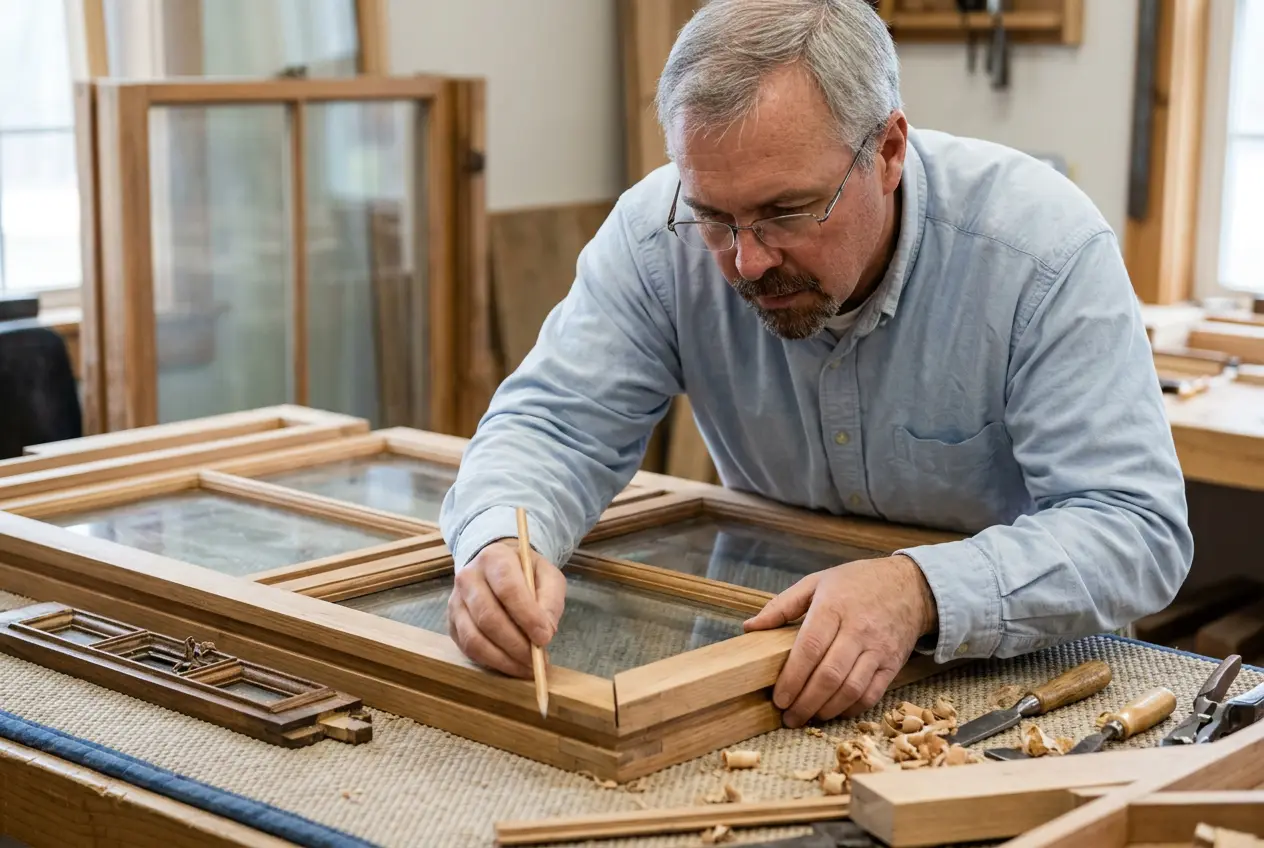
John reproduces historic profiles in his workshop by tracing the original and shaping new stock to match. Repaired and replaced pieces are fitted and finished so they read as part of the original window rather than a patch.
Sills Deserve Special Attention
Exterior sills take the most weather and are usually the first part to fail. Restoring the proper slope, sealing end grain, and keeping the drip edge working are what make a sill repair last through Boise winters.
Planning the Work
Not every window needs the same treatment. John walks through the house with you, sorts what should be repaired, what should be replaced, and what can wait, and builds a plan around the budget you are comfortable with.