
Original Doors Are Worth a Second Look
Many homes in Boise's North End and East End were built in the early 1900s through the 1930s, and many still have their original solid wood doors. These doors were made from dense, slow grown lumber that is hard to find today.
When a door sticks, sags, or looks weathered, replacement can seem like the easy answer. In many cases, a skilled repair restores both function and appearance for less than the cost of a quality replacement.
Common Problems and Their Causes
A sticking door is often caused by loose hinge screws, a sagging frame, or seasonal movement in the wood. Cracked panels usually come from finish that has sealed the panel tight so it cannot move. Loose joints come from old glue that has dried out.
Each of these problems has a different fix. That is why John starts every door repair by finding the cause, not just treating the symptom.
What a Restoration Involves
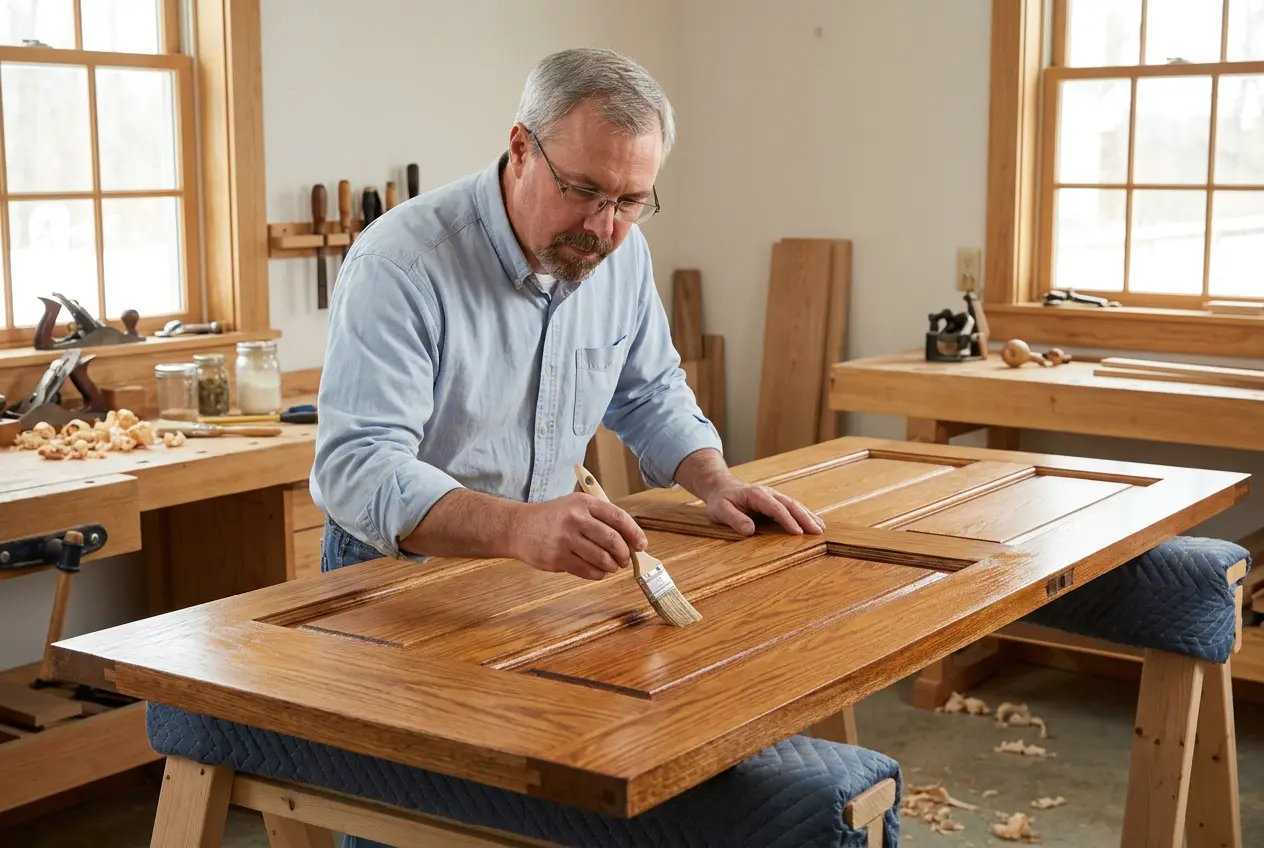
A typical restoration may include regluing joints, replacing a split panel with matching wood, repairing worn hinge areas, and refinishing. The door is then rehung and adjusted so it closes smoothly and latches properly.
John once repaired a solid wood door from a home built in the 1930s that the owners thought was beyond saving. The finished door looked and worked as it did when the house was new.
When Replacement Makes More Sense
Sometimes a door has too much rot or structural damage to justify repair. An honest assessment helps you decide which path fits your home and your budget.
Common Questions
Can an old solid wood door be repaired instead of replaced?
Often it can. John has restored solid wood doors from homes built in the 1930s. He will assess your door and tell you honestly whether repair makes sense.